sábado, 3 de noviembre de 2012


Chapter 1 Introduction: What Is International Business?
ü  What makes international business different from domestic business?

R. An international business is a business whose activities are carried out across national borders. This differs from a domestic business because a domestic business is a business whose activities are carried out within the borders of its geographical location.
A domestic company is one that confines its activities to the local market, be it city, state, or the country it is in. It deals, generally, with one currency, local customs and cultures, business laws of commerce, taxes and products and services of a local nature.
The international company, on the other hand deals with businesses and governments in one or more foreign countries and is subject to treaties, tariffs. currency rates of exchange, politics, cultural differences, taxes, fees, and penalties of each country it is doing business in. It may also be conducting business in it's home country, but the emphasis is on trading in the international marketplace.

ü  What are the various types of risks that firms face when they conduct international business?
R. Solution: There are 4 types of risks in International Business
  • Commercial Risk: The first kind of risk involved is commercial risk in which there is possibility of a company incurring huge losses or failing to exist because of various reasons that include badly executed strategies .These also include timing of the company into a particular market, the competitive intensity existing prevailing in the market, poor strategy execution and the weakness of the partner and also the various kinds of operational problems.
  • Country risk: Country risk is also a very major risk factor in international business .It has the capacity to have very negative effects on the operations of an organization and also the profit because of the various kinds of changes in the economic, judicial and administrative scenario in a foreign nation.
  • Currency risk: Financial risk is another name for currency risk. It is related to the effects of undeterminable up downs in daily exchange rates of different currencies pegged against each other .It includes the valuation of the assets and the foreign taxation policies of different countries.
  • Cross-cultural risk: The last kind of risk while doing IB is the cross cultural risk. It is sometimes also referred to as cultural shock. It is a scenario where a slight situation related to miscommunication regarding cultures may put the human values at a significant risk. It is related to different decision related styles and ethical practices.
 
 
Chapter 2 Globalization of Markets and the Internationalization of the Firm
ü  Summarize the six dimensions of globalization. Which of these do you think is the most visible manifestation of globalization?

R.
Integration and interdependence of national economies: Results from firms’ collective international activities. Governments contribute by lowering trade and investment barriers.
Rise of regional economic integration blocs: Free trade areas are formed by two or more countries to reduce or eliminate barriers to trade and investment, such as the EU, NAFTA, and MERCOSUR.
Growth of global investment and financial flows: Associated with rapid growth in foreign direct investment (FDI), currency trading, and global capital markets.
Convergence of buyer lifestyles and preferences: Facilitated by global media, which emphasize lifestyles found in the U.S., Europe, or elsewhere; firms market standardized products.
Globalization of production: To cut costs, firms manufacture in low labor-cost locations, such as Mexico and Eastern Europe. Firms also source services from abroad.
Globalization of services: Banking, hospitality, retailing, and other service industries are rapidly internationalizing. Firms outsource business processes and other services in the value chain to vendors overseas. And, in a new trend, many people go abroad to take advantage of low-cost services.

 
What are the pros and cons of globalization?

Pros:

Integration of world financial markets: Enables firms to raise capital, borrow funds, and engage in foreign currency transactions wherever they go. Banks now provide a range of services that facilitate global transactions.
Industrialization, economic development, and modernization: These trends transformed many developing economies from producers of low-value goods to higher-value goods, such as electronics and computers. Simultaneously, rising living standards have made such countries more attractive as target markets for sales and investment.
Advances in technology: Reduces the cost of doing business internationally by allowing firms to interact cheaply with suppliers, distributors, and customers worldwide. Facilitates the internationalization of companies, including countless small firms.

 Manufacturing and Transportation Technologies
Revolutionary developments permit manufacturing that is low scale and low cost, via computer-aided design of products (CAD), robotics, and IT-managed production lines.
•In transportation, key advances include fuel-efficient jumbo jets, giant ocean-going freighters, and containerized shipping. The cost of international transportation has declined substantially, spurring rapid growth in global trade.
•Collectively, technological advances have greatly reduced the costs of doing business internationally.
Globalization of services: Banking, hospitality, retailing, and other service industries are rapidly internationalizing. Firms outsource business processes and other services in the value chain to vendors overseas. And, in a new trend, many people go abroad to take advantage of low-cost services.


Cons:
Offshoring and the flight of jobs: Jobs are lost as firms shift production of goods and services abroad in order to cut costs and obtain other advantages. Firms benefit, but communities and industries are disrupted.
Effect on the poor: In poor countries, while globalization usually creates jobs and raises wages, it also tends to disrupt local job markets. MNEs may pay low wages, and many exploit workers or employ child labor. Globalization’s benefits are not evenly distributed.
Effect on the natural environment: Globalization harms the environment by promoting industrialization and other activities that generate pollution, habitat destruction, and other environmental harm. E.g., as China and India industrialize, air and water pollution have become major hazards.
Effect on National Culture: Globalization opens the door to foreign firms, global brands, unfamiliar products, and new values. Increasingly, consumers buy similar products, modeled according to Western countries, especially the U.S. In this way, traditional norms, values, and behaviors may homogenize over time. National identity may be lost to “global” culture.


Chapter 3 Organizational Participants That Make International Business Happen
What are the specific characteristics of focal firms? Distinguish the characteristics of international MNEs, SMEs, and born global firms.

R. The Multinational Enterprise (MNE)

A large organization with a network of production plants, marketing subsidiaries, and regional headquarters in numerous countries; e.g., Ford, Sony, Unilever, Citibank, McDonald’s, Amazon
•Historically the most important type of focal firm
•In China, Russia, and other countries that emphasize socialism, some MNEs are state owned.
Small and Medium-Sized Enterprise (SME) as a Focal Firm

A relatively small player in its respective industry, usually defined as a firm with 500 or fewer employees.
•SMEs constitute the great majority of firms worldwide; they usually create the most new jobs.
•Characterized by limited resources, which often prevent internationalizing via FDI. Instead, SMEs usually internationalize via exporting.
•There are many more SMEs doing international business today than ever before.

The Born Global as a Focal Firm

A relatively new breed of SME that undertakes early and substantial internationalization
•Usually niche players, typically exhibit a high degree of innovation, entrepreneurial orientation, and a “borderless” mindset
•Usually leverage information and communications technologies to internationalize early and operate effectively in world markets
•Make up the fastest-growing segment of exporters in most countries


ü  What are major distribution channel intermediaries based in the home country and those based abroad?
R. Vinci (France), Hochtief AG (Germany), FCC, SA (Spain), Bechtel (USA), Skanska (Sweden), Bouygues (France), Fluor (USA), Strabag SE (Austria).


Chapter 4 The Cultural Environment of International Business
ü  Describe culture and cross-cultural risk.

ü  Cross-cultural risk: A situation or event where a cultural miscommunication puts some human value at stake. It arises in environments characterized by unfamiliar languages and unique value systems, beliefs, and behaviors.

 Explain why culture matters in international business. In what types of contexts can cross-cultural differences cause concerns for managers?


Developing products and services
•Preparing advertising and promotional materials
•Preparing for overseas trade fairs and exhibitions
•Screening and selecting foreign distributors
•Communicating and interacting with foreign partners
•Negotiating and structuring ventures
•Interacting with current and potential customers from abroad


Distinguish the three layers of culture. What are the major elements of country-level and professional culture?

Chapter 5  Ethics and International Business
ü  Distinguish between ethics and corruption in international business.

Ethics are moral principles and values that govern the behavior of people, firms, and governments.
Corruption is the abuse of power to achieve illegitimate personal gain.

ü  What is the Corruption Perceptions Index, and how can a manager use it to assess international risk? (in you own country)

ü  Describe typical ethical problems that firms encounter in international business.

Corruption, Bribery and grease payments, Abuse or neglect of employees and partners, Deceptive or illicit accounting and financial practices, Deceptive or illicit marketing practices, Environmental harm, General lapses in ethics.

jueves, 10 de julio de 2008

Etiquetas: ,

Estos videos muestran como se ven en cámara lenta acciones cotidianas. Para que muchos no se confundan, una cámara de alta velocidad toma más cuadros por segundo, entre más cuadros por segundo, más lenta se hace la toma, pero eso sí, con mucho detalle.

1/2


2/2

Etiquetas: , , ,


Estas esculturas kinéticas se hacen por medio de esferas metálicas sobre cuerdas que están operadas y manipuladas por un ordenador con el cual se producen formas y figuras.
Esto se muestra en el
museo de BMW en Munich.

Etiquetas: , , ,

Son tan sólo cinco sentidos: tacto, olfato, oído, vista, gusto. Si falta alguno de ellos estamos en problemas aunque también es cierto que hay algunos más importantes que otros. No es extraño entonces que de tanto en tanto uno se haga esas preguntas existenciales y sin respuesta del tipo “Si tuvieras que elegir entre quedarte sordo o sin olfato, ¿qué eligirías?”.


Mejor no pensar en la respuesta y centrar la atención en nuevas ideas en tornos a nuestros valiosos cinco sentidos.
Madeline, una curiosa máquina que sería algo así como una detective del olfato. Cocinándose a fuego lento, esta máquina concepto ha sido diseñada por un hombre llamado Charles Blanca, quien ha querido profundizar en el sentido del olfato para establecer recuerdos.

Algunos lo habrán experimentado, caminas por la calle y de pronto un sutil aroma os trae a la memoria una catarata de recuerdos. Ya sea un perfume, un plato, el olor de una prenda de ropa. La mente está repleta de “recuerdos olfativos” sólo que la mayoría de las veces éstos permanecen ocultos en nuestro cerebro hasta que un aroma especial los despierta en un abrir y cerrar de ojos. Algo parecido hace Madeline, una suerte de cápsula del tiempo que busca revivir viejas experiencias olfativas olvidadas a partir de la evolución del medio ambiente. Para realizar este viaje interior sólo hay que tomar asiento y respirar.

Etiquetas: , ,

Cuando el calor aprieta cualquier truco es bueno para encontrar un sitio donde refrescarse.

Los jóvenes británicos, por ejemplo, están utilizando las imágenes vía satélite que proporciona Google Earth para encontrar piscinas en barrios residenciales, según informa The Register.

La policía británica ha alertado ya a los propietarios de casas con piscina que es posible que su propiedad sea utilizada sin permiso por jóvenes que detectan los lugares de baño gracias a la identificación de los objetivos a través de Google Earth.

De hecho varios propietarios de piscinas ya se han llevado un buen susto al regresar a casa y encontrar a un grupo de personas desconocidas refrescándose en su casa.

Los organizadores de este tipo de eventos utilizan además los móviles y las redes sociales para convocar a los asistentes. En Facebook, por ejemplo, han aparecido publicados los números de teléfono de personas que supuestamente se encargan de identificar las piscinas y fijar la hora del asalto.

Fuente: http://www.20minutos.es/noticia/394504/0/piscinas/google/earth/

miércoles, 9 de julio de 2008

Etiquetas: , ,

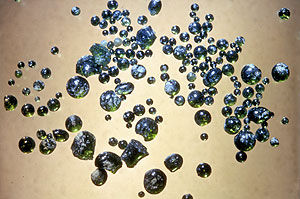
  • El hallazgo ha sido posible casi 40 años después gracias a técnicas actuales
  • Se han estudiado muestras verdes y naranjas traídas por varias tripulaciones
  • Los expertos tendrán que replantearse la teoría sobre el origen del satélite

MADRID.- "Te lo dije, ¡es verde!". Todo el mundo recuerda el "pequeño paso" de Armstrong, pero, desde el punto de vista científico, el momento culminante del programa 'Apollo' fue quizás esta exclamación.
Los astronautas David Scott y James Irwin se encontraban frente a un material lunar que, según había quedado de manifiesto tras una pequeña discusión, era de color verde.
Casi 40 años después, y gracias a nuevas técnicas de análisis, los expertos se han topado con otra gran sorpresa al estudiar éstas y otras muestras similares traídas desde nuestro satélite: en su interior hay agua.
El hallazgo, presentado en la revista 'Nature', contradice la idea mantenida hasta ahora de que la Luna es un lugar prácticamente desprovisto de agua y otros compuestos volátiles, y podría poner en entredicho algunos aspectos de la
actual teoría de la formación del satélite, según la cual éste nació como consecuencia de un choque entre la Tierra y un planetoide del tamaño de Marte.
Las rocas estudiadas son cristales de origen volcánico y de colores verdosos o anaranjados, recogidos por los astronautas de la NASA durante las misiones
'Apollo 11' (julio de 1969),'Apollo 15' (julio de 1971) y 'Apollo 17' (diciembre de 1972).
Los nuevos análisis, realizados con un tipo de espectrometría de masas que no existía en los tiempos del 'Apollo', han revelado que los cristales guardan en su interior alrededor de 46 partes por millón de agua. Los científicos estiman que, originalmente, había unas 750 partes por millón de agua en el magma antes de que las erupciones lo expulsaran del interior de la Luna.
Esta cantidad es demasiado pequeña para el alcance de los instrumentos tradicionales, pero significativa a la hora de replantearse el origen de la Luna, ya que los modelos actuales establecían que todo el hidrógeno -y, por tanto, toda el agua- se habría volatilizado por completo tras la gran colisión que dio lugar al material que formó la Luna, hace unos 4.500 millones de años.
El nuevo análisis sugiere que el agua procede del interior de la Luna y escapó mediante erupciones volcánicas hace unos 3.000 millones de años. La presencia de estas moléculas tiene dos posibles explicaciones, según apuntan los investigadores: o había agua en la Tierra antes de la gran colisión y no se evaporó del todo, de forma que los actuales modelos fallan, o bien llegó hasta la Luna primigenia a través de meteoritos que chocaron con ella.
El descubrimiento sugiere también que aún debería quedar agua enterrada bajo la superficie lunar. "Lo mas seguro es que parte del sólido que forma el interior de la Luna (manto lunar) tiene que tener agua disuelta. Lo que no sabemos es cuál es la distribución (cuán homogénea es la concentración) y, desde luego, cuánto hay de agua en las rocas del manto lunar", según apunta a elmundo.es Alberto Saal, científico de la
Universidad de Brown (Rhode Island, EEUU) y principal autor de la investigación.

Fuente: http://www.elmundo.es/elmundo/2008/07/09/ciencia/1215620932.html

Etiquetas: ,

La empresa japonesa Pioneer se ha lanzado en la carrera de los discos ópticos presentando en sociedad un disco de hasta 400 GB de memoria, ocho veces más que lo que puede almacenar un Blu-ray de doble capa.

Como aún no existen grabadores comerciales para esta tecnología, Pioneer anunció que de momento sólo estará disponible para venderse con contenidos pregrabados.
Para lograr esta capacidad de memoria, Pioneer utilizó precisamente el
sistema de las capas similar al de su competidor Blu-Ray, sólo que en vez de dos capas esta empresa añadió 16 y el experimento le ha salido bien.
Resolvieron algunos problemas de interferencia en la lectura entre una y otra capa y, lo más importante, los hicieron legibles para el sistema óptico Blu-Ray, evitando cualquier problema de incompatibilidad de los
sistemas.

Copyright 2008 Lo más interesante . All rights reserved.

Template By: Hive Designs Ported By: Theme Lab. Blogger by akOOgle